
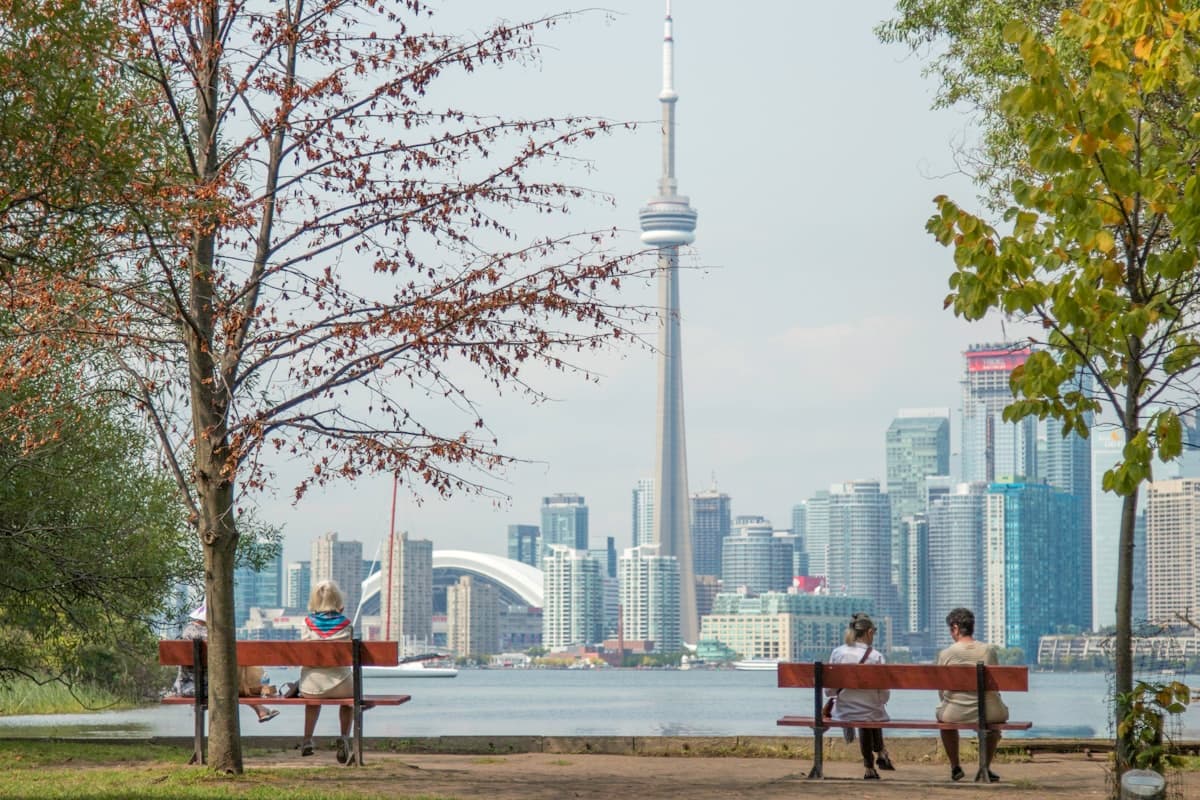
You've just landed at Pearson International Airport. You've got a match ticket, a group chat blowing up, and six weeks of FIFA World Cup ahead of you. This is the trip of a lifetime — don't let the first 24 hours wreck it. Here are 10 mistakes that cost international fans real money and real time, and exactly what to do instead.
1. Don't Buy a SIM Card at the Airport Kiosk
Those brightly coloured kiosks near baggage claim look helpful. They're a trap. Airport SIM prices are marked up 40–60% above retail. A plan that costs $25 at Walmart or 7-Eleven sells for $39–45 at Pearson.
Do this instead: If your phone supports eSIM, activate an Airalo Canada plan before you even board — 3 GB for ~USD $9, done in 5 minutes via QR code. If you want a physical SIM, pick one up at any Walmart or 7-Eleven once you're in the city. The first transit ride costs $3.35 — not a taxi to a phone store.
What it costs you if you ignore this: $15–20 in overpriced data you'll use up in two days.
2. Don't Take a Taxi or Rideshare From Terminal 1 to Downtown
An Uber from Pearson Terminal 1 to downtown Toronto costs $50–80 CAD depending on surge pricing — and on match days, prices spike hard. The ride takes 35–60 minutes in traffic.
Do this instead: Take the UP Express train from Terminal 1 directly to Union Station. It's 25 minutes, runs every 15 minutes, and costs $6.49 CAD if you tap your regular contactless bank card (Visa/Mastercard/Amex all work). You'll arrive faster and with $50 still in your pocket.
What it costs you if you ignore this: $50–70 and potentially an extra 30 minutes sitting in traffic.
3. Don't Exchange Currency at the Airport
The currency exchange booths at Pearson offer rates 8–15% worse than mid-market rate. That's $80–120 lost on every $1,000 converted. The "no commission!" signs are misleading — the margin is baked into the rate.
Do this instead: Tap your international Visa or Mastercard everywhere — TTC, GO Transit, restaurants, shops. Canadian merchants are fully contactless. If you genuinely need cash, use a bank ATM inside a TD, Scotiabank, or RBC branch downtown. Avoid standalone "Forex" ATM machines; they charge punishing conversion fees.
What it costs you if you ignore this: $80–120 per $1,000 exchanged, vanished before you've had a single beer.
4. Don't Assume You Can Wing Transit on Match Day
On the six match days (June 12, 17, 20, 23, 26, July 2), Exhibition GO Station and the 509/511 streetcar stop will be overwhelmed within minutes of the final whistle. Fans who don't know the difference between the GO Train and the streetcar — or where to board — end up stranded for 40 minutes post-game.
Do this instead: Before your first match, take one dry run. Ride the GO Train from Union to Exhibition Station (5 minutes, ~$3.80 CAD). See exactly where the platform is, where the exits are. After the whistle: skip the 509/511 entirely. Walk straight to the GO Train. It runs every 15 minutes on match days and will have you back at Union in 5 minutes, while streetcar riders are still standing on King West.
What it costs you if you ignore this: 30–45 minutes post-match in a crowd, when you could be at a bar watching the next game.
5. Don't Eat at the Restaurants Right Outside BMO Field
The food vendors and restaurants immediately surrounding BMO Field and Exhibition Place know exactly what they have: a captive crowd with match tickets. Prices are inflated, quality is hit-or-miss, and queues are brutal on match days.
Do this instead: Head to King West or Liberty Village — both are a 15-minute walk from BMO Field and have dozens of bars and restaurants at normal prices. Get there 2–3 hours before kickoff, eat properly, and soak up the pre-match atmosphere. This is where locals and experienced fans go.
What it costs you if you ignore this: $30–40 for a mediocre meal you could get for $15 three blocks away.
6. Don't Book Last-Minute Accommodation for Match Days
If you haven't locked in a place to stay for the specific nights before your match dates, check right now. Hotels in the downtown core are filling up. The window to get a reasonable rate within 30 minutes of BMO Field is closing — if it hasn't already. Within days of each match, expect prices to double.
Do this instead: Even if you can't stay downtown, look at options along the GO Transit Lakeshore West line — cities like Oakville and Mississauga are 20–30 minutes from Union Station, at a fraction of the Toronto hotel rate. Alternatively, Airbnb in Parkdale, Roncesvalles, or Bloor West gives you quick TTC access without the premium.
What it costs you if you ignore this: Potentially 2–3× the hotel rate, or a 90-minute commute from a budget motel you booked in panic.
7. Don't Ignore the Weather (Seriously)
Toronto in June and July sits in a humidity band that surprises most visitors. Average highs are 25–30°C (77–86°F) but with humidity it regularly feels like 35°C+ (95°F+). Afternoon thunderstorms roll in fast — the kind that go from clear to downpour in 15 minutes.
Do this instead: Pack a light packable rain jacket. Wear moisture-wicking clothes on match days — stadium seats are in direct sun and the air barely moves. Carry a 500ml water bottle; public water fountains exist everywhere and are free. Sunscreen is not optional.
What it costs you if you ignore this: A match spent sweating through your team's jersey, or soaked to the bone on the walk back to the GO platform.
8. Don't Carry Large Bags to the Match
BMO Field has a strict small bag policy. Bags larger than a standard clutch or small drawstring (roughly 6" × 9") are not permitted inside. Every year, fans are turned away at security — or forced to sprint back to their hotel — because they didn't check the policy.
Do this instead: Travel to the match with a small crossbody or drawstring bag only. Leave the camera bag, backpack, and oversized tote at the hotel. Phone, ticket (digital is fine), ID, credit card, and a light layer. That's the loadout.
What it costs you if you ignore this: Being turned away at the gate 20 minutes before kickoff.
9. Don't Skip the Fan Zones
FIFA 2026 fan zones are not an afterthought — they are an event within the event. Live screenings of other matches, music acts, food vendors from participating nations, and thousands of fans in full kit. These run on non-match days and are genuinely where the tournament atmosphere lives between games.
Do this instead: Check the City of Toronto's official Fan Festival schedule. On your non-match days, don't spend 4 hours at the CN Tower. Go to the fan zone in the morning, eat something from a Brazilian or Mexican stall, watch a match on a massive screen with 20,000 people, feel the energy that makes this tournament unlike anything else.
What it costs you if you ignore this: The part of the World Cup that most fans remember longest — and you'll only read about it on the flight home.
10. Don't Trust "Google Maps Says 20 Minutes"
Google Maps is optimistic. On match days, King Street, Lakeshore Boulevard, and Bathurst Street go into full gridlock. A 20-minute Google ETA becomes 55 minutes in a cab, and the TTC slows too when 40,000 people are heading the same direction. On non-match days, Toronto traffic is perfectly manageable — on match days, it is not.
Do this instead: Leave 30 minutes earlier than Google tells you to. Use the GO Train as your primary match-day transport — it runs on its own tracks and is immune to road congestion. Plan your route the night before and know your Plan B if your first TTC connection is full.
What it costs you if you ignore this: Watching kickoff from outside the stadium on your phone while your seat goes cold.
Toronto is an incredible host city and the matches at BMO Field will be some of the most memorable of the entire tournament. Every mistake on this list is avoidable — and avoiding them means the difference between a stressful trip and an unforgettable one. The fans who do their homework are the ones you'll be jealous of on the way home.
Check our Transport Tips page for full transit routes, and the Restaurants Near BMO Field guide for exactly where to eat before kickoff.